In modern electrical systems, automation plays a pivotal role in enhancing operational efficiency, safety, and reliability. Central to this automation are relays, which act as intelligent switching devices controlling circuits without manual intervention. Understanding the various types of relays empowers engineers, technicians, and system designers to optimize performance while minimizing downtime. Understanding types of relay improves automation system efficiency.
Importance of Relay Knowledge in Automation
- Enhanced System Efficiency: Correct selection of relay types ensures circuits operate seamlessly, reducing unnecessary power loss and response delays.
- Improved Safety: Knowledge of relay functionality helps prevent overloads, short circuits, and equipment damage, safeguarding personnel and assets.
- Optimized Maintenance: Familiarity with relay types allows for proactive troubleshooting and faster corrective measures, reducing operational interruptions.
Common Types of Relays and Their Applications
- Electromechanical Relays (EMR)
- Working Principle: Operates through a mechanical armature that opens or closes contacts when energized.
- Advantages: Simple design, reliable switching, and cost-effective for low to moderate frequency applications.
- Applications: Widely used in industrial control panels, motor starters, and lighting control circuits.
- Solid-State Relays (SSR)
- Working Principle: Uses semiconductor devices to switch circuits without moving parts.
- Advantages: High-speed operation, long lifespan due to lack of mechanical wear, and silent functioning.
- Applications: Ideal for high-frequency switching, heating control, and sensitive electronic equipment.
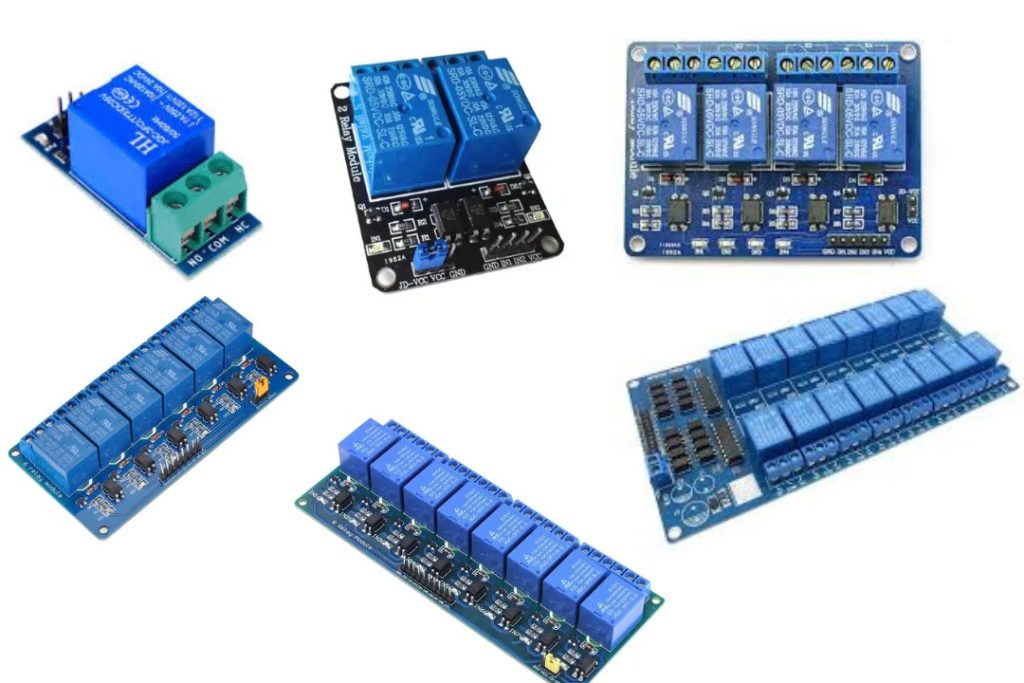
- Time-Delay Relays
- Working Principle: Introduces a delay in the opening or closing of contacts after receiving an input signal.
- Advantages: Provides precise timing for sequential operations and prevents system shock due to sudden switching.
- Applications: Useful in motor control sequences, conveyor systems, and automated lighting operations.
- Thermal Relays
- Working Principle: Detects excessive current through thermal expansion and triggers the switch to protect circuits.
- Advantages: Prevents motor overheating and ensures long-term equipment protection.
- Applications: Commonly used in motor overload protection and industrial heating systems.
Benefits of Understanding Relay Types
- Precision in Control Systems: Selecting the correct relay type ensures each part of the automated system responds accurately to inputs.
- Energy Efficiency: Proper relay integration reduces unnecessary power consumption by avoiding continuous operation of circuits.
- System Longevity: Using relays suited to specific applications minimizes wear and prolongs overall system life.
- Operational Reliability: Accurate relay selection enhances consistency in automated processes, supporting uninterrupted production.
Conclusion
Grasping the characteristics and applications of different relay types significantly improves the efficiency of automated electrical systems. Whether it is electromechanical, solid-state, time-delay, or thermal relays, informed selection ensures optimal performance, energy savings, and reliable operation. Engineers and technicians who invest in understanding relays can achieve more precise control, safer systems, and long-lasting automation solutions, ultimately contributing to the advancement of modern electrical infrastructure.