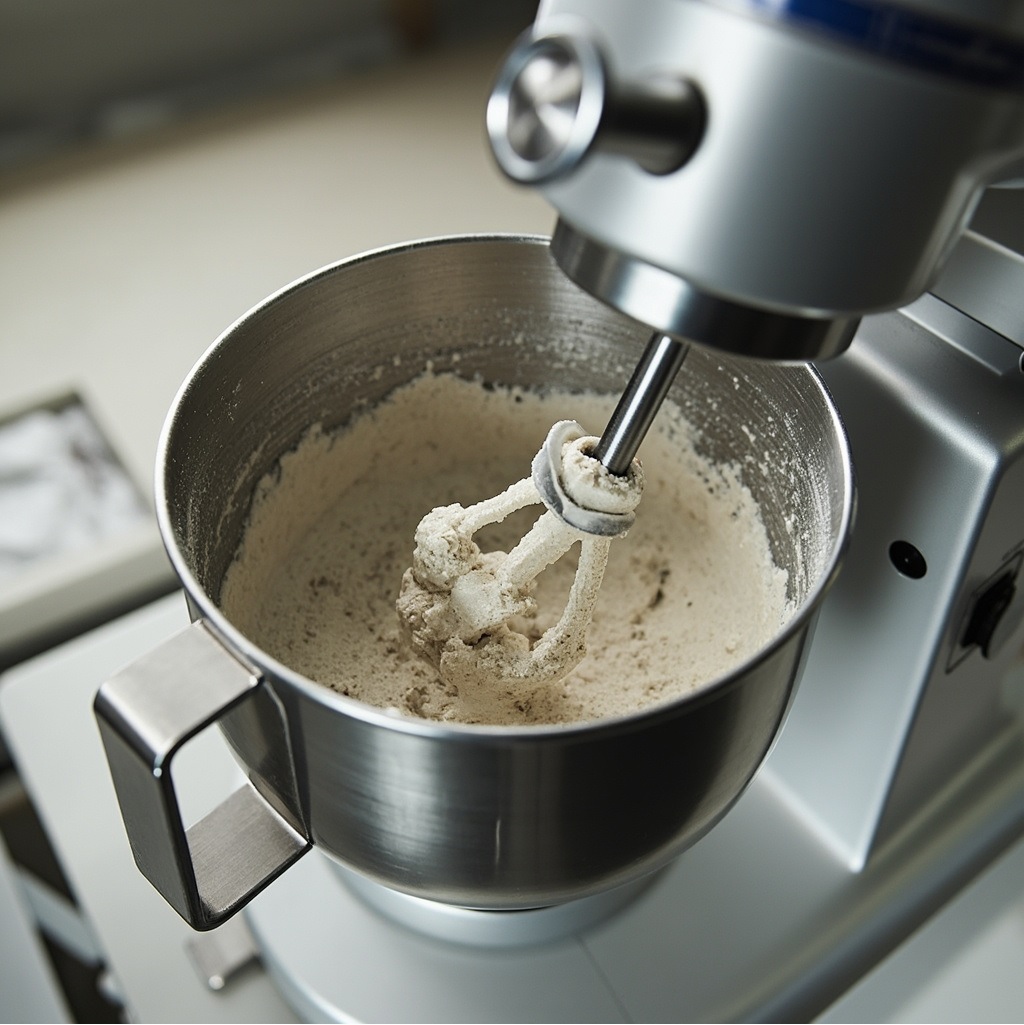
 You are standing on a factory floor, staring at two very different machines. One spins a paddle on its own axis while the entire assembly rotates around the bowl. The other has a fixed drum that tumbles the material like a slow-motion washing machine. Both are called mixers. Both can handle castable materials. But if you pick the wrong one, you will be scraping half-cured concrete off your tools by lunchtime, and your batch will fail the flow test.
Let’s cut through the noise. The choice between a planetary mixer and a pan mixer for castable refractories is not about brand loyalty or price tags. It is about the physics of how your material behaves under shear. Castable materials are not just wet sand. They contain fine powders, coarse aggregates, binders, and water that must be distributed with surgical precision. A few seconds of under-mixing means dry pockets. A few seconds of over-mixing means you have killed the workability.
The planetary mixer is the precision instrument. Imagine a mixing tool that travels around the bowl while spinning rapidly on its own center. That dual motion creates a complex flow pattern. It pulls material from the bottom, folds it over the top, and scrapes the walls clean. For castables that contain high amounts of fine particles—like silica fume or microsilica—this is a godsend. The planetary action breaks up agglomerates that a simple rotating drum would leave intact. You get a homogeneous paste with consistent rheology. The downside? Batch size is limited. You cannot fill a planetary mixer to the brim and expect it to work. The geometry demands a certain headspace, and if you overload it, the mixing becomes chaotic and inefficient.
The pan mixer, on the other hand, is the brute force champion. It uses a rotating pan and a set of stationary or counter-rotating blades. The material is constantly lifted, dropped, and sheared against the pan walls. This design excels at handling large volumes and coarse aggregates. If your castable recipe includes chunks of aggregate larger than 10 millimeters, the pan mixer will not clog or stall. It also handles dry mixing phases better. You can pre-blend all the powders and aggregates before adding water, which is critical for formulations that require a precise moisture window. But here is the catch: pan mixers generate more heat. Friction from the constant tumbling raises the temperature of the batch. For fast-setting castables, that extra heat can trigger premature hydration. You lose working time. You might even ruin the entire batch.
So which one do you choose? It depends on your material’s sensitivity to shear and heat. If you are working with low-cement or ultra-low-cement castables that require intense dispersion of fine particles, go planetary. The gentle but thorough folding action gives you a uniform mix without overheating. If you are producing high-volume batches of conventional castables with heavy aggregates and you have tight production schedules, go pan. Just monitor the temperature and adjust your water addition accordingly.
There is also a hybrid approach that many experienced operators use. They start the dry mix in a pan mixer to get the aggregates and powders blended, then transfer the batch to a planetary mixer for the wet phase. This two-step process maximizes throughput while maintaining quality. But it requires floor space and an extra set of hands.
Here is the hard truth: no mixer can fix a bad formulation. If your castable recipe is poorly designed, the best equipment in the world will still give you segregation or flash set. But given a sound recipe, the mixer becomes the deciding factor between a product that flows perfectly into the mold and one that crumbles under vibration.
REFAMIX has spent years refining both planetary and pan mixer designs specifically for castable materials. Their planetary units feature variable speed drives that let you dial in the exact shear rate your formulation needs. Their pan mixers include integrated cooling jackets to manage heat buildup. But the real value is in the consultation. They will not sell you a machine without first analyzing your material’s particle size distribution, water demand, and setting time.
Do not let the price tag make the decision for you. A cheap pan mixer that overheats your batch will cost you more in wasted material than a premium planetary unit that gets it right every time. And do not fall for the myth that bigger is always better. A planetary mixer that is slightly undersized but perfectly matched to your batch volume will outperform a pan mixer that is too large and leaves material stuck in dead zones.
Walk into your facility. Look at your current reject rate. If you are throwing away more than five percent of your castable batches due to poor mixing, you have already paid for a new mixer in lost material. The question is not whether you can afford the upgrade. The question is whether you can afford to keep guessing.